Pakhuis Hollandia
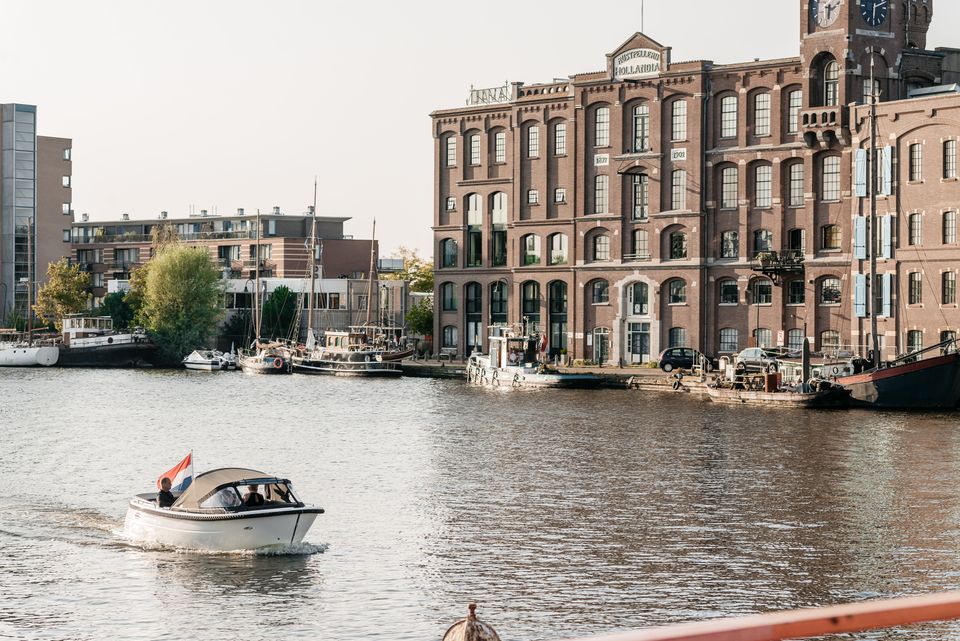
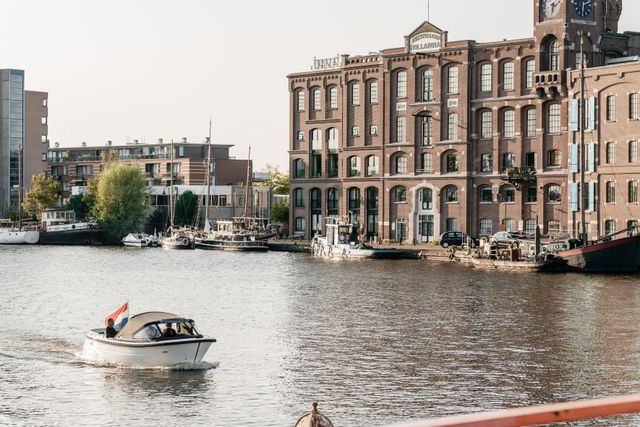
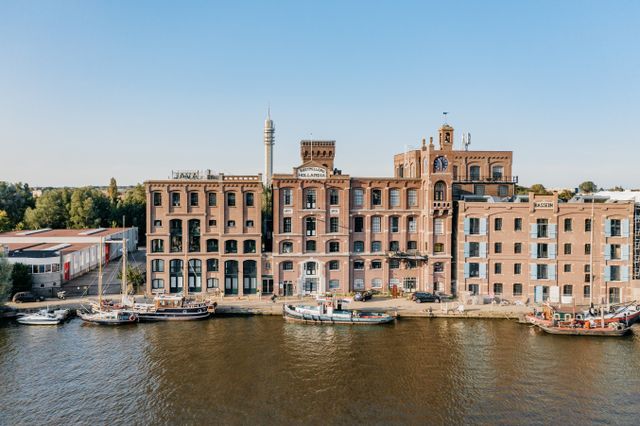
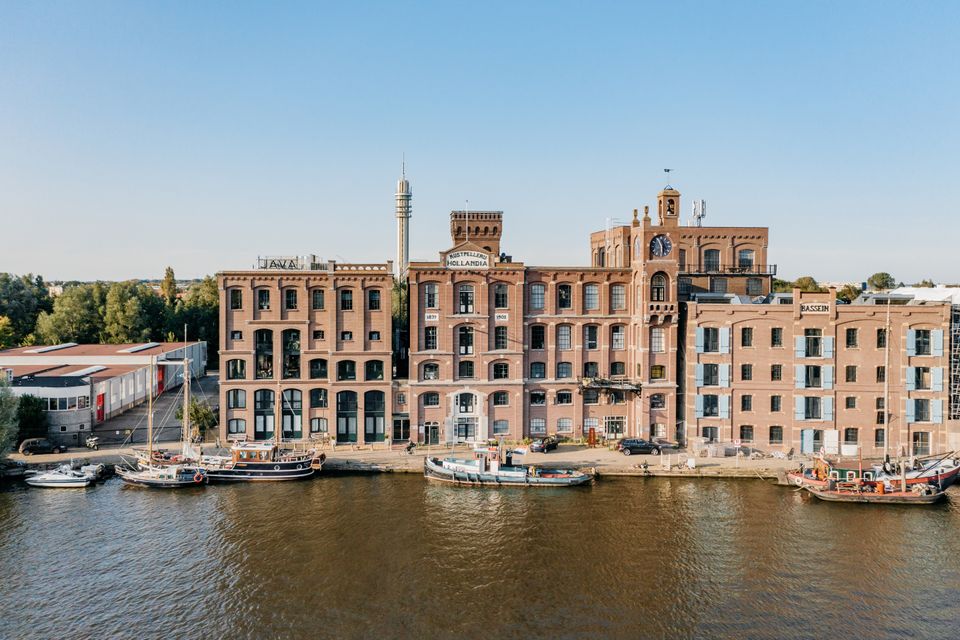
The former PAKHUIS and rice husking plant 'Hollandia' (I and II) is an inspiring example of eclectic architecture with neo-Romanesque elements. The origins of Hollandia I date back to 1877, when a warehouse was built here. In the years that followed, it underwent several extensions, including a water tower in 1888 and a renewed façade in 1902. A major extension followed in 1913 with Hollandia II, complete with new factory buildings and steam boilers. Connected to warehouse 'Java' and attached to 'Bassein', Hollandia forms an essential part of the rich industrial heritage along the Zaan bank, where the food, oil and timber industries flourished.
The enormous growth of the Zaanish rice husking plant went ...
The former PAKHUIS and rice husking plant 'Hollandia' (I and II) is an inspiring example of eclectic architecture with neo-Romanesque elements. The origins of Hollandia I date back to 1877, when a warehouse was built here. In the years that followed, it underwent several extensions, including a water tower in 1888 and a renewed façade in 1902. A major extension followed in 1913 with Hollandia II, complete with new factory buildings and steam boilers. Connected to warehouse 'Java' and attached to 'Bassein', Hollandia forms an essential part of the rich industrial heritage along the Zaan bank, where the food, oil and timber industries flourished.
The enormous growth of the Zaan rice husking industry went hand in hand with the "rice explosion" of Burma, which erupted in the second half of the 19th century. The windmills in the Zaan region could not handle the flow of rice. A large windmill was at best at power to process about 800 tonnes of rice a year. Still, mill bosses were reluctant to switch to power. With the windmills, they could figuratively go either way by easily switching from rice to the grist mill. With steam husking, it was less straightforward. Not everyone felt inclined to throw themselves into rice. A few daring entrepreneurs were not deterred. They faced a choice: either fill the Zaan region with windmills or opt for an expensive steam factory with a colossal production capacity. Finally, the deciding factor was the falling cost price of hulled rice when steam power was used.
Image- Nander de Wijk