
Apostolisch Gemeenschap
Due to circumstances, this monument is unfortunately closed during Open Monuments day. Apologies for the inconvenience.
On the east side of the Zaan, Waterland Mennonites settled early on. Around 1600 they had a preaching house and from 1656 a wooden exhortation. In 1860, they decided to build a new church building on the Oostzijde (no. 82), as a sign of independence. Architect L.J. Immink designed a striking pentacle-shaped octagonal building, completed in 1861 for f 47,400. It was nicknamed "the Doofpot" because of its resemblance to a mill without sails.
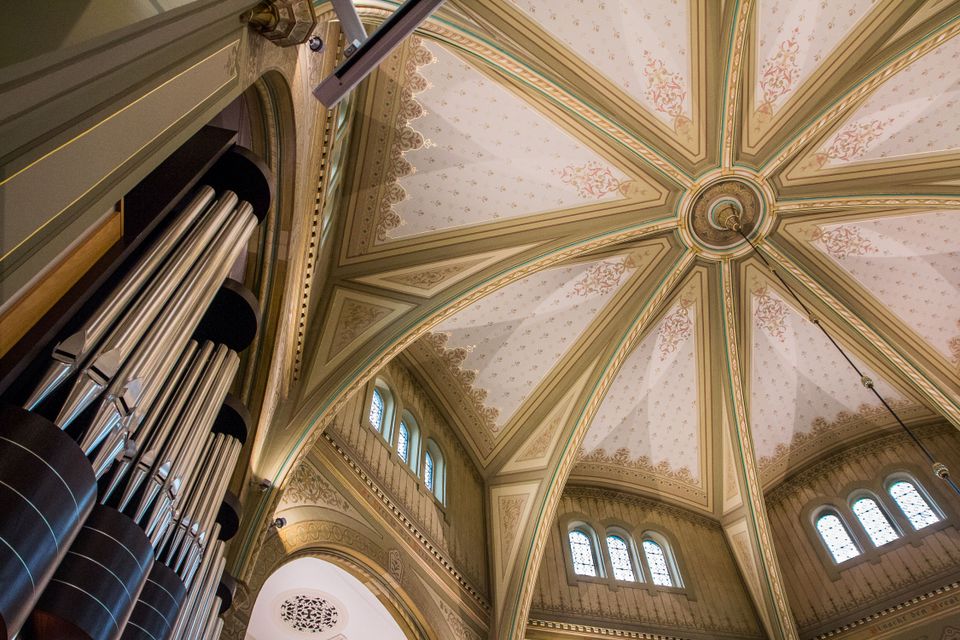
In 1887, the ceiling was richly painted, possibly to rival other exhortations. The congregation had some wealthy members, such as Zwaardemaker and Schoen. In 1953, the Apostolic Society took over the building. This religious-humanist movement seeks connection, compassion and sustainability.
Between 2000 and 2005,...
Due to circumstances, this monument is unfortunately closed during Open Monuments day. Apologies for the inconvenience.
On the east side of the Zaan, Waterland Mennonites settled early on. Around 1600 they had a preaching house and from 1656 a wooden exhortation. In 1860, they decided to build a new church building on the Oostzijde (no. 82), as a sign of independence. Architect L.J. Immink designed a striking pentacle-shaped octagonal building, completed in 1861 for f 47,400. It was nicknamed "the Doofpot" because of its resemblance to a mill without sails.
In 1887, the ceiling was richly painted, possibly to rival other exhortations. The congregation had some wealthy members, such as Zwaardemaker and Schoen. In 1953, the Apostolic Society took over the building. This religious-humanist movement seeks connection, compassion and sustainability.
A thorough restoration took place between 2000 and 2005. The old annexe from the 1920s was replaced by a modern wing with meeting room and ancillary rooms (cost: € 3.2 million).
Architecture and significance
The octagonal shape refers to early Christian building traditions, in which such shapes were used for baptisteries and martyr's churches. Until the end of the French era, Mennonites were not allowed to build churches that looked like churches, hence their often barn-like appearance. With more tolerance after that time, distinctly ecclesiastical designs also emerged, such as this exhortation, inspired by early Christian simplicity and symbolism.